This is part 2 in a series. If you want to read Part 1: Orvieto, be my guest.
I tried my best to learn as much Italian as possible via the DuoLingo app. Yet I found myself growing increasingly frustrated by how it kept trying to make me use the Italian word for sugar (zucchero) instead of teaching me how to ask where the bathroom is, asking for the check or proper ways to talk to the police should you want to fight a handsome bartender who is flirting with your wife. Regardless, I learned as much as I could about the language, the customs and some of the cultural differences we’d be facing.
I also learned a lot about driving.
Driving in Italy is not an activity for the meek. I spent time reading and researching as much as I could about driving in their beautiful country so as to not encounter any surprises or accidentally break any laws. No amount of reading, however, can prepare you for the many types of roadways you’ll encounter.
As we exited the beautiful town of Orvieto, we drove through an alleyway and under a tunnel, both of which we weren’t sure we could fit through, then spent a good amount of time on a two-lane road much like what we have here in East Tennessee. The landscape is gorgeous on these roads and it’s fairly easy to navigate. The interstate system (or autostrade) is equally simple to navigate and traffic was usually pretty light. Driving through the cities, however, can be a bit of a nightmare as tailgating is common (though not considered aggressive) and vehicle noses are constantly poking out into your path from cross streets.
From cobblestone alleys and country roads to interstates, city streets and curvy mountain passes, we drove on them all during our four-hour trip to Massa. While our morning continental breakfast back in Orvieto was amazing, it didn’t stick with us long and we were more than a little hungry about three hours into our trip. It was then that we realized that while it’s nice that the streets of Italy are not littered with billboards and business signs like they are here in the States, it can be extremely difficult to find a spot to eat while you’re on the road!
Is that a restaurant? A store? Someone’s home?
Fortunately, a Chef Express and gas station was just off the interstate, so we pulled in to see what kind of snacks we could procure from the bar. Chef Express provides snacks and fast eats for railway stations in Italy, this one just happened to be a part of a gas station. Think of it like a very nice convenience store. Katie returned to her normal self after eating some kind of focaccia sandwich while I enjoyed a slice of pizza.
Pizza count: 2
The final stretch was a very long, very curvy, very uphill country road that was often one lane. Blind switchback curves and still more one-lane tunnels guided us up the final stretch to our agriturismo*. By the time we had scaled the 100 steps (not an exaggeration) from the parking lot to our apartment for the next few days, we were exhausted. The picturesque view we had made it all worth it, however.
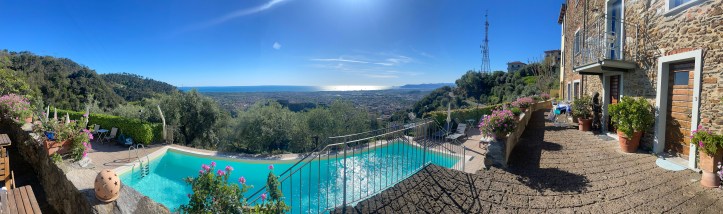
*Agriturismos are basically Airbnbs owned by local farmers. Visitors can stay in rooms, wings, suites or even full apartments like what we had that are furnished by the owners of working farms, who then receive a tax break for their accommodation.
Massa is a town in the Tuscan (Toscana) region of Italy at the foot of the Apuan Alps and has a fairly low population. Along with neighboring city Carrara, the city specializes in the export of marble and the manufacturing of office furniture.
Once we’d settled in our tiny apartment, we crawled through the window that led to our private patio and enjoyed glasses of limoncello (Italian lemon liqueur) that we’d procured from a family owned shop back in Orvieto. We relaxed a bit and discussed possible dinner arrangements, finally deciding to drive back down the mountain and stake out a parking lot in the city center.

We were right at the edge of the end of riposo, but thought we could find a spot to eat and it would be dinnertime when we arrived. We settled on a place called Fermento Social Bistrot and began our walk. As we approached the bistro, we noticed a mercato Italaiano (Italian market) across the street, so we popped in to grab a few items for the agriturismo. Though I had been practicing, my Italian wasn’t great and the shop owner spoke no English so our experience was a blast. Utilizing the Italian term questo (“this”), we were able to score pasta pappardelle, pancetta, salsa marinara (marinara sauce) and olio d’oliva (olive oil). The shop keeper was incredibly friendly and had just as much fun trying to decipher our needs as we had trying to communicate them.
Across the way at Fermento, we were still a little early for dinner, so our server (who also spoke no English) was a little panicky when we let her know we were there to eat. She scrambled over to the bartender who spoke some English and asked if it was okay if the dumb Americans ordered food (this is an exaggeration). He said it was fine – we were close enough.
Our server still waited on us, but the bartender handled most of the communication. He brought us a bottle of wine with a variety of snacks* that we happily chowed on while perusing the menu.
*This was one of our favorite parts of Italian culture. Everywhere we went for drinks, we were served a number of snacks from popcorn and peanuts to olives, cheese and cured meat, all free of charge. I told Katie that I’d be way more apt to go out “for a drink” if I knew we’d get quality snacks for free. Instead, I have to pay $12 for a handful of mozzarella sticks? Do better, America.
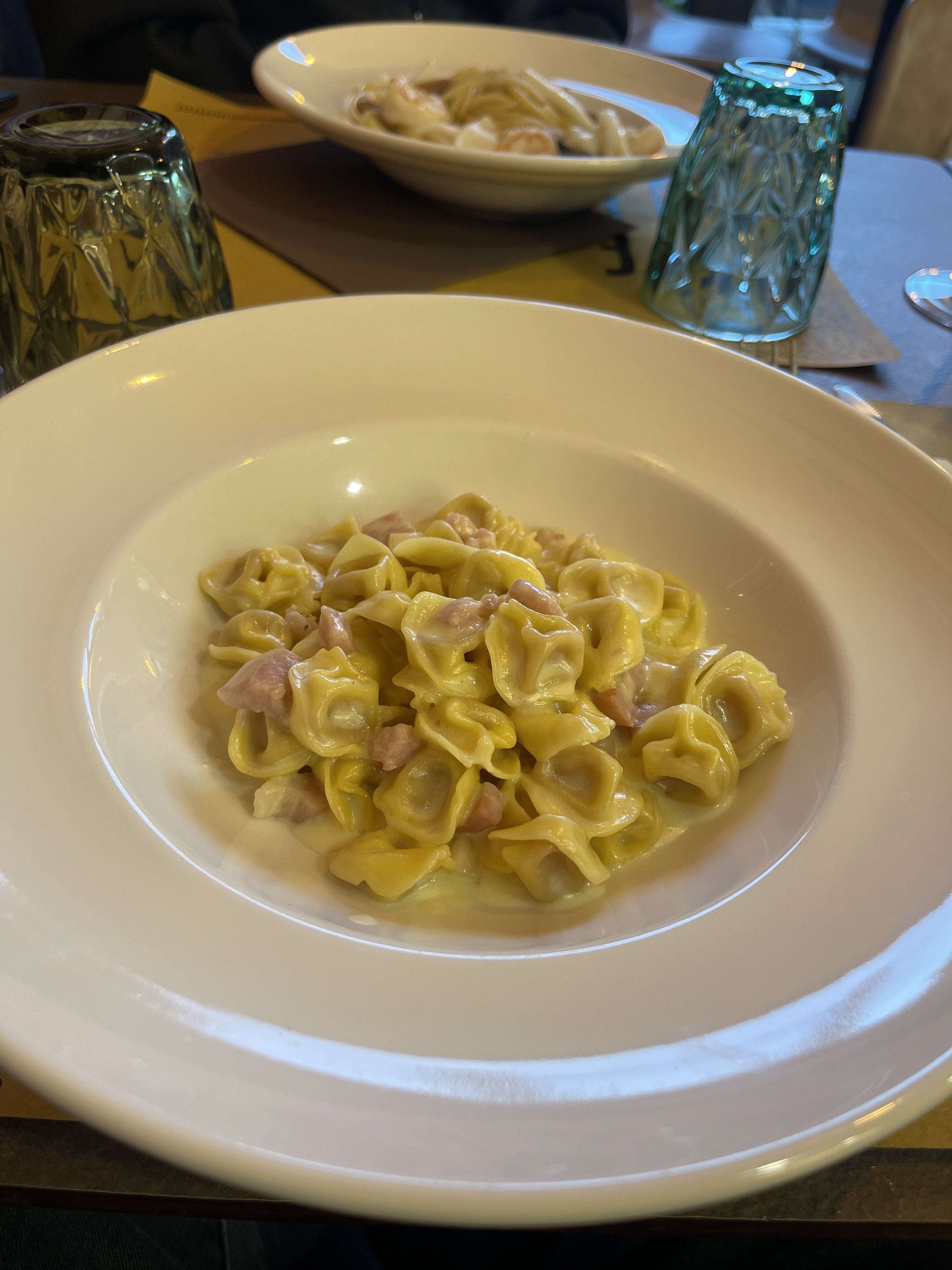
For dinner, Katie ordered a seafood pasta and I enjoyed a tortellini dish made with pancetta and a cream sauce. It was the second night in a row that I had to close my eyes every time I chewed my food – it was THAT good.

After dinner, Katie got a short wine lesson from the bartender, who recommended a few local wines (we bought two more bottles) and our server brought me an assortment of biscotti (cookies) and caffé (espresso) on the house. I got free cookies and Katie got to flirt with a handsome Italian – we both won the day. We said our goodbyes, then triumphantly drove back up the crazy hill for some much-needed sleep.
###
Our first morning in Massa was stressful. While our aggriturismo apartment was adorable and was fully furnished, the farmers offered no breakfast or coffee. Fortunately, my wife is a genius and had packed some “road snacks” that we utilized for breakfast and we just suffered without any coffee that morning. We didn’t have a ton of time anyway because we needed to be out the door and on the road for a 30-minute drive to the nearby city of La Spezia.
La Spezia was the closest train station that served the coastal area of Cinque Terre, which was our destination for the day. Not being familiar with the area, I accidentally drove by the train station’s parking lot and hurriedly parked in the first open (and free) space I could find. This would later work out to our advantage. We made the five-minute walk to the train station, met up with our tour guide Fulva (yes, we made jokes) and made our way.
Cinque Terre refers to a string of coastal villages along the Italian Riveria that date back to the 11th century. Severely damaged during World War II, the area has certainly seen its share of political and economical ups and downs, yet it remains as picturesque and charming as ever with its multi-colored houses, rocky coastline and mountainside vineyards. We would be visiting the towns of Monterosso al Mare, Vernazza, Manarola and Riomagiore.
Our tour with Fulva was very informative, but as with much of Italy, required much walking and many steps climbed. It goes without saying that both Katie and I were beginning to turn into our alternative selves once the hanger set in. We wern’t scheduled to eat for another two towns, so we asked Fulva if we could get a snack.
“You mean, like … focaccia?”
She didn’t know what we meant by “snack” but she still hit the nail on the head. She pointed us to a place called Batti Batti’ Foccacceria where we split a focaccia sandwich and a slice of pizza. This, paired with a cold Coke Zero made us come back to life.

Pizza count: 3
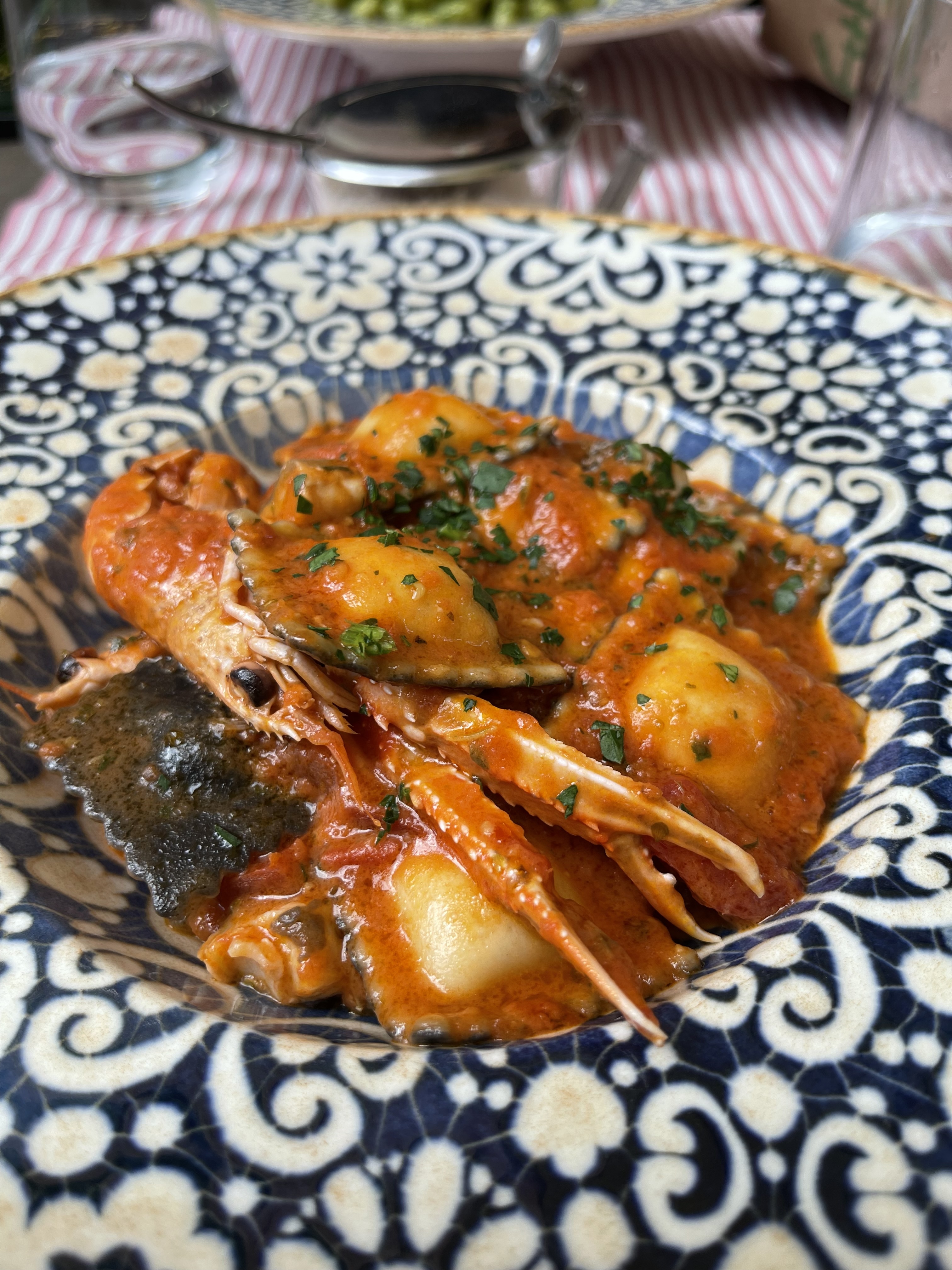
Our final stop in Monterosso al Mare included lunch at a place simply called L’osteria (the Tavern). The food was beautiful, though the service didn’t match. I had a dynamite seafood ravioli made with sea bass and fresh crawfish while Katie enjoyed an incredibly delicious Gnocchi al Pesto.
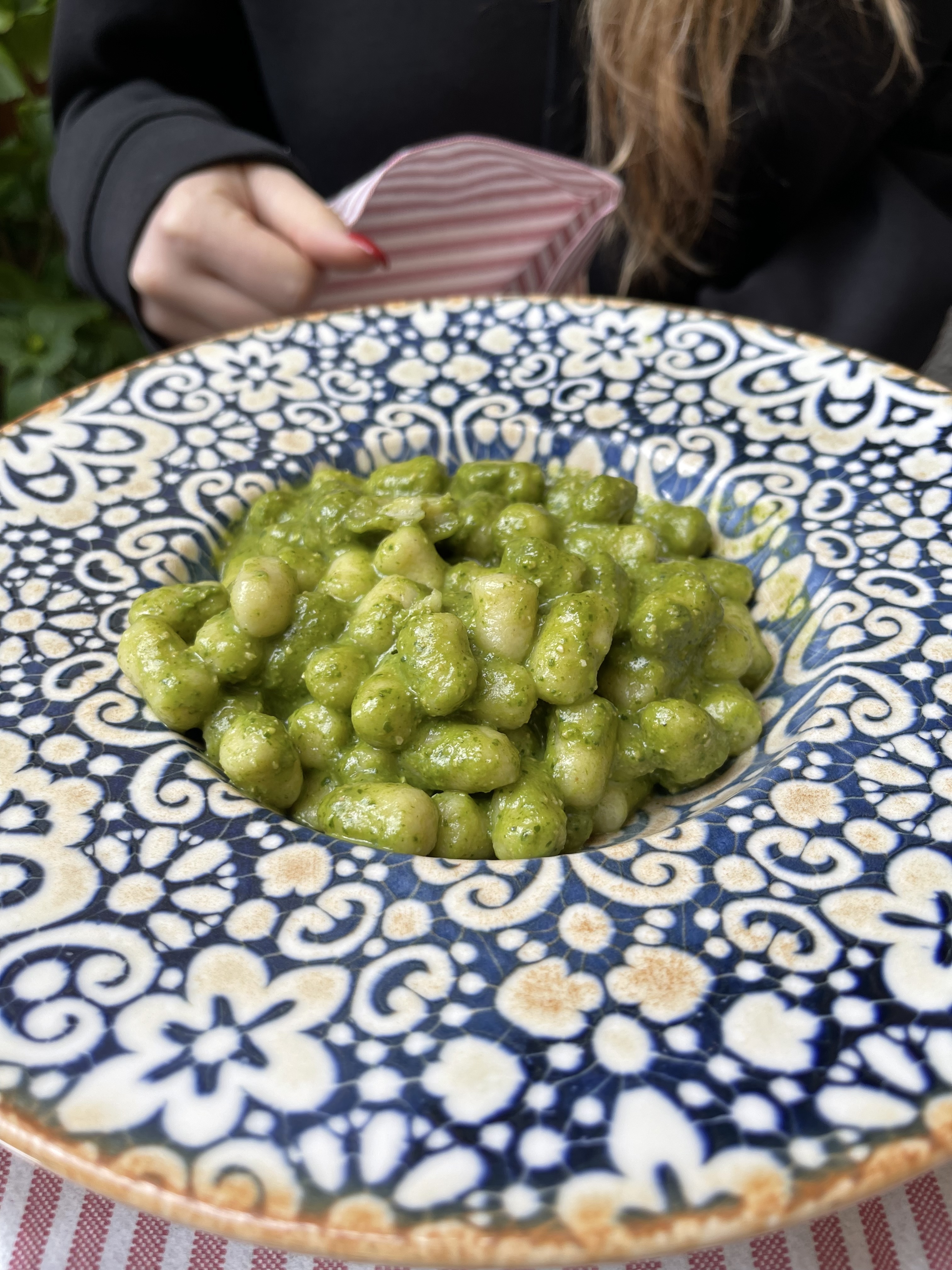
Our servers were quite rude to Katie before lunch when she asked for a Limoncino* Spritz. The response she received was a spitting, “You do not order that before lunch.” Message received. After lunch, we found a cool little bar that not only spezialized in the Limoncino Spritz, but also served them to-go. In your face, rude guy.
*Limoncello and Limoncino are the same drink. The term limoncello is used in southern Italy, while limoncino is used in the north.
At the conclusion of our tour, Katie and I thought it would be a good idea to pop into a bakery on our way back to the car to pick up something we could eat for breakfast the next day. Unfortunately, riposo was in full effect in La Spezia and everyone was closed. As luck would have it, though, just as we approached the car, a shop keeper was re-opening her mercato not five feet away from our front bumper.
We walked inside to find a variety of essentials – a few cold cuts, pre-packaged baked goods, etc. I found a bag of coffee and Katie picked up a small bottle of milk, but I couldn’t find sugar anywhere. It was then that I owed DuoLingo an apology, as I was forced to greet the shop keeper and ask, “Dov’ é il zucchero?” (where is the sugar?). She smiled warmly, then guided me to the back of the small shop where she pulled down a bag of sugar. I thanked her, we paid, and we made our way back to Massa.
Before we scaled the mountain again, Katie expressed a strong desire for gelato. I’m not qualified to argue with such beauty, so I found a parking lot and Googled a nearby gelataria. Tentazioni Gelateria Artigianale is a small gelateria in a traffic-limited part of town that was populated by a great number of Massa locals who were milling about and enjoying time with their families. Katie ordered a mascarpone cone and I enjoyed a cup of coconut gelato – this was also my first complete interaction fully in Italian.

After polishing off our gelato, we popped into the nearby Apuan Bar where we were able to secure a meat-and-cheese sandwich and a lemon pastry we’d planned to split for breakfast the next day. With breakfast and coffee secured, we finally went back “home.”
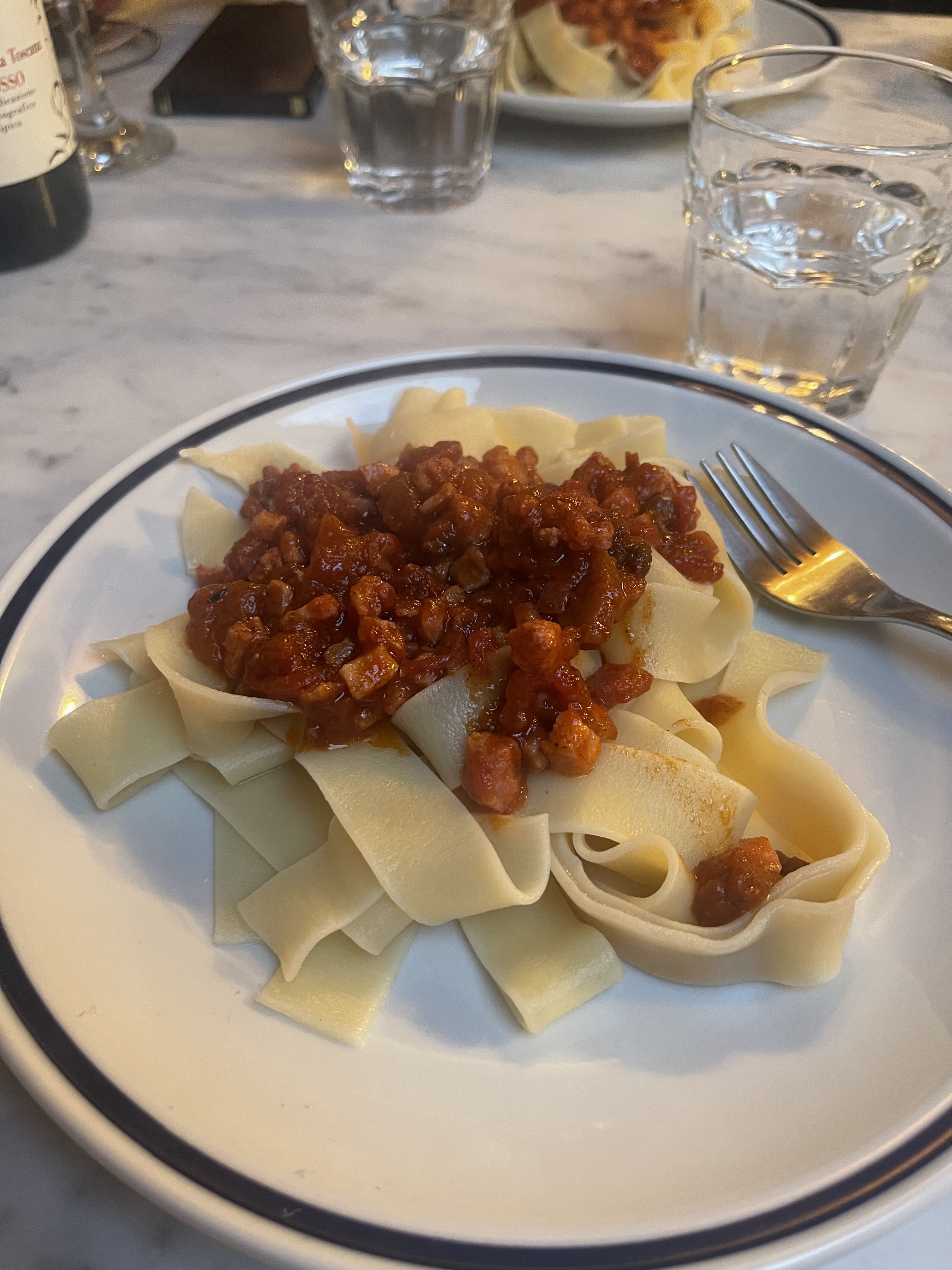
That night, we opened one of the bottles of wine we’d bought the previous night and Katie took to our apartment kitchen with our local groceries to boil the pappardelle, sautée the pancetta and warm the marinara. She seasoned it all with a pinch of some special seasoning salt we’d picked up in Orvieto and we enjoyed a delightful homemade dinner together in our temporary Italian home.
###
The next day started just as stressful as the previous. Though we had a coffee maker and bought the coffee, milk and zucchero, we’d forgotten to pick up coffee filters. I was scrambling to figure out a way to make it work – because we weren’t going coffeeless two days in a row – when I found a stovetop espresso maker. I was able to make a batch of espresso, used the electric tea kettle to boil some water, then combined the two for some delicious “you can’t beat me” coffee. We enjoyed our brew alongside the treats we’d picked up the previous afternoon.
Our mission this day was to tour the beautiful marble quarries in Carrara, which we did and thoroughly enjoyed. Our tour led us to a mountaintop shop called Larderia La Stazione. The humble shop specializes in a specific type of cured meat that involves packing wild boar in a marble box with curing salts and seasoning. We sampled their wares and went on about our day.
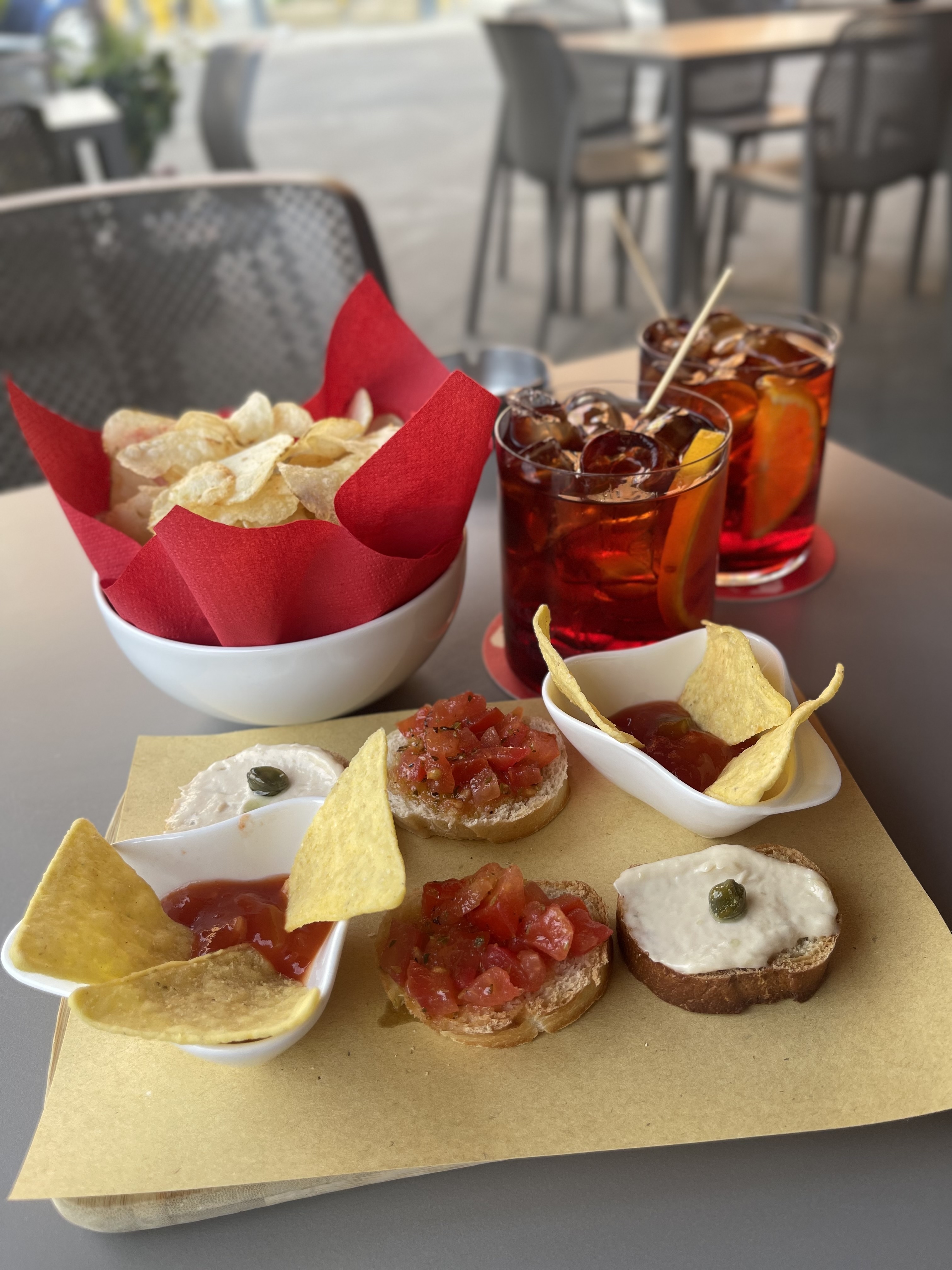
After our tour of the mountains, we went back to Massa and parked where we had the previous afternoon. We were intrigued by the part of town we’d found the day before and wanted to continue investigating. We ended up in a square and found a place called Hermes Bar where we snagged a patio table and got our aperitivo on with a pair of matching Negronis. These were served with a very generous portion of chips, salsa, bruschetta, fish paté and crostini.
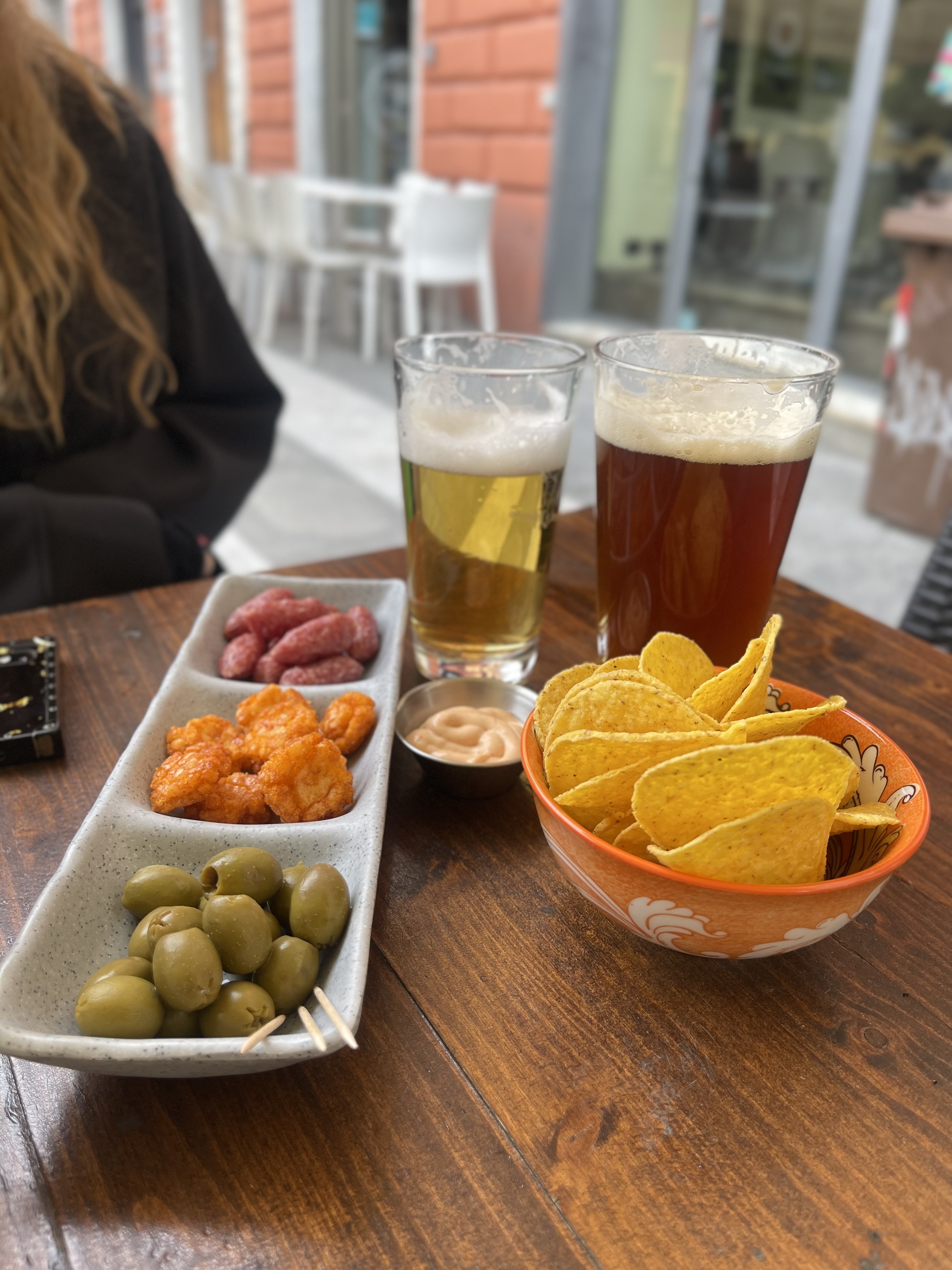
Across the way, we spotted another bar called Malto Pub that was blasting rock music and was populated by a small group of Italian punkers. We decided to hop over there next and made friends with a wonderful bartender who spoke perfect English due to having spent a lot of time in the United States. On their patio, we enjoyed two rounds of Italian ales and a flight of snacks that included olives, chips, aioli, rice cakes and cured sausages. This ended up being one of our favorite spots on the trip.
Dinnertime had finally rolled around, so we closed out our tab at the bar and walked back through the square, passing shops, churches and a variety of restaurants along the way. We ended up finding a table at a pizzeria named L’Inferno (“Hell”). Let me tell you … despite the name, this pizza had nothing at all to do with anything hellish!
Our server spoke no English but had a blast trying to communicate with us. We ordered a bottle of rosé and landed on one of the most perfect pizzas we’d ever tasted: speck and mascarpone. I don’t know how, but the pizza just kept getting better with each stop on our vacation.
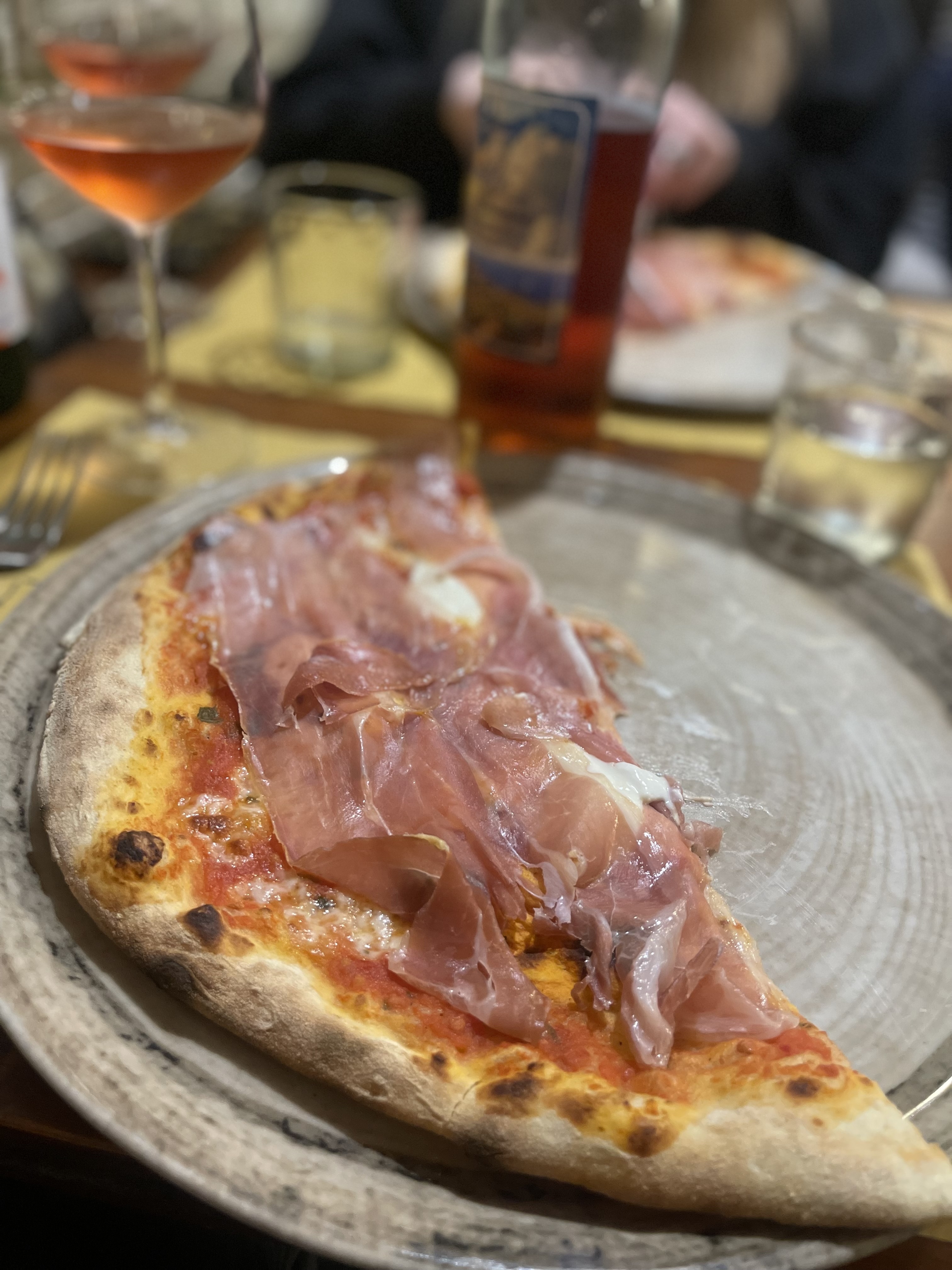
Pizza count: 4
Our final morning in Massa was, again, very stressful. I may have figured out how to make coffee without a coffee maker, but my method was highly dependent on electricity, which we did not have when we woke up that morning. Storms had rolled through overnight and it was raining out. The air was cool and our apartment was freezing. We also had a long drive ahead of us. We needed coffee.
Fortunately, our stovetop was gas so I was able to get it rocking with the aid of a lighter I found in a kitchen drawer. I made our batch of espresso, then utilized a stock pot to boil some water. At this point, it felt like cave man coffee, but we weren’t going without another day.
Next stop: Montepulciano!
 Beard Hair In My Coffee 5.0
[…] is part 3 in a series. If you’d like to read Part 1: Orvieto or Part 2: Massa & Cinque Terre, be my […]
LikeLike
[…] is part 4 in a series. If you’d like to read Part 1: Orvieto, Part 2: Massa & Cinque Terre or Part 3: Montepulciano & Florence, be my […]
LikeLike
[…] is part 5 in a series. If you’d like to read Part 1: Orvieto, Part 2: Massa & Cinque Terre, Part 3: Montepulciano & Florence or Part 4: Assisi, be my […]
LikeLike
[…] I wrote about it many times, first in my foodie series Mangiamo! Eating Italia – Part 1: Orvieto, Part 2: Massa & Cinque Terre, Part 3: Montepulciano & Florence, Part 4: Assisi and Part 5: Rome. I also published Italia: […]
LikeLike